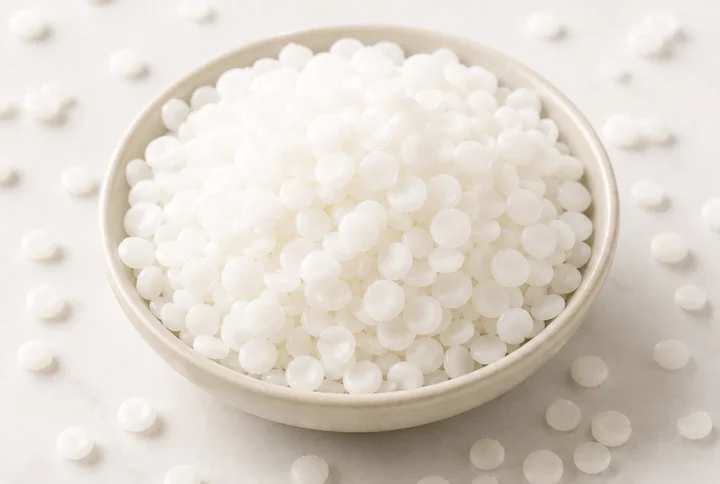
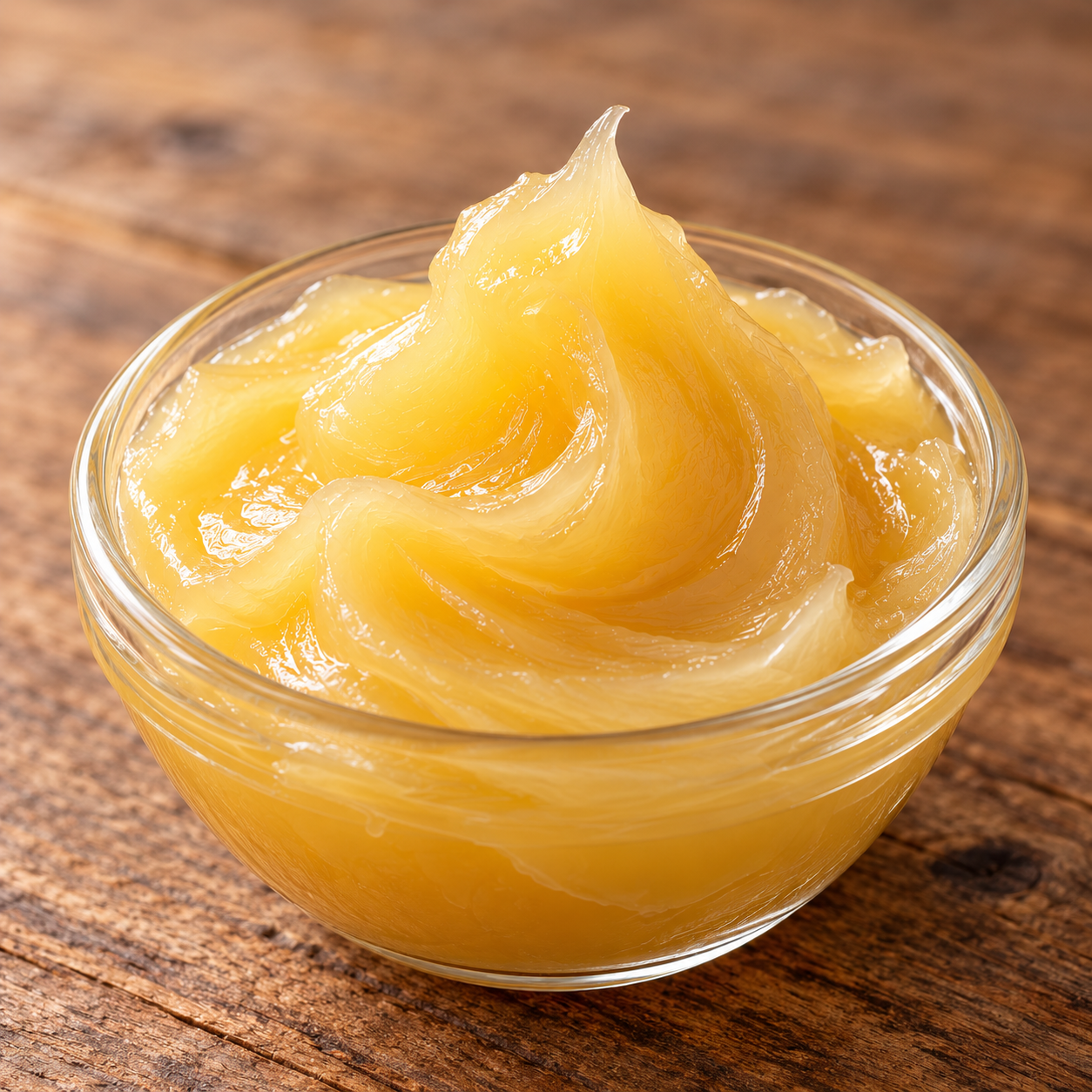

Lanolin is a purified form of wool grease obtained from sheep’s wool. Its chemical composition is quite complex, with the major components being esters of long-chain fatty acids and fatty alcohols. Similar to petrolatum (Vaseline), lanolin is primarily an occlusive agent that helps retain moisture in the skin by reducing transepidermal water loss. The key difference between the two is that petrolatum originates from petroleum, whereas lanolin comes from an animal source. While petroleum jelly is highly effective at reducing moisture loss, lanolin offers an added benefit by helping to significantly improve the appearance and feel of dry, rough skin.
Due to its ability to be readily absorbed, the material provides intensive nourishment for dry, rough skin. Its exceptional emollient properties help maintain moisture, leaving it feeling soft, smooth, and supple. These properties are supported by lanolin’s unique ability to incorporate approximately twice its weight in water while remaining stable, despite being practically insoluble in water. Once applied, lanolin penetrates the top layer of the skin, where it absorbs and retains water, acting like a sponge and helping to maintain the skin’s natural moisture balance.
Lanolin is widely used in cosmetics and can typically be found in skin-care products such as creams, lotions, and balms, as well as in lip and nail-care products. Although various sources report different comedogenicity ratings, the material is generally considered to have a low to negligible tendency to clog pores.