
Hand sanitizing gel
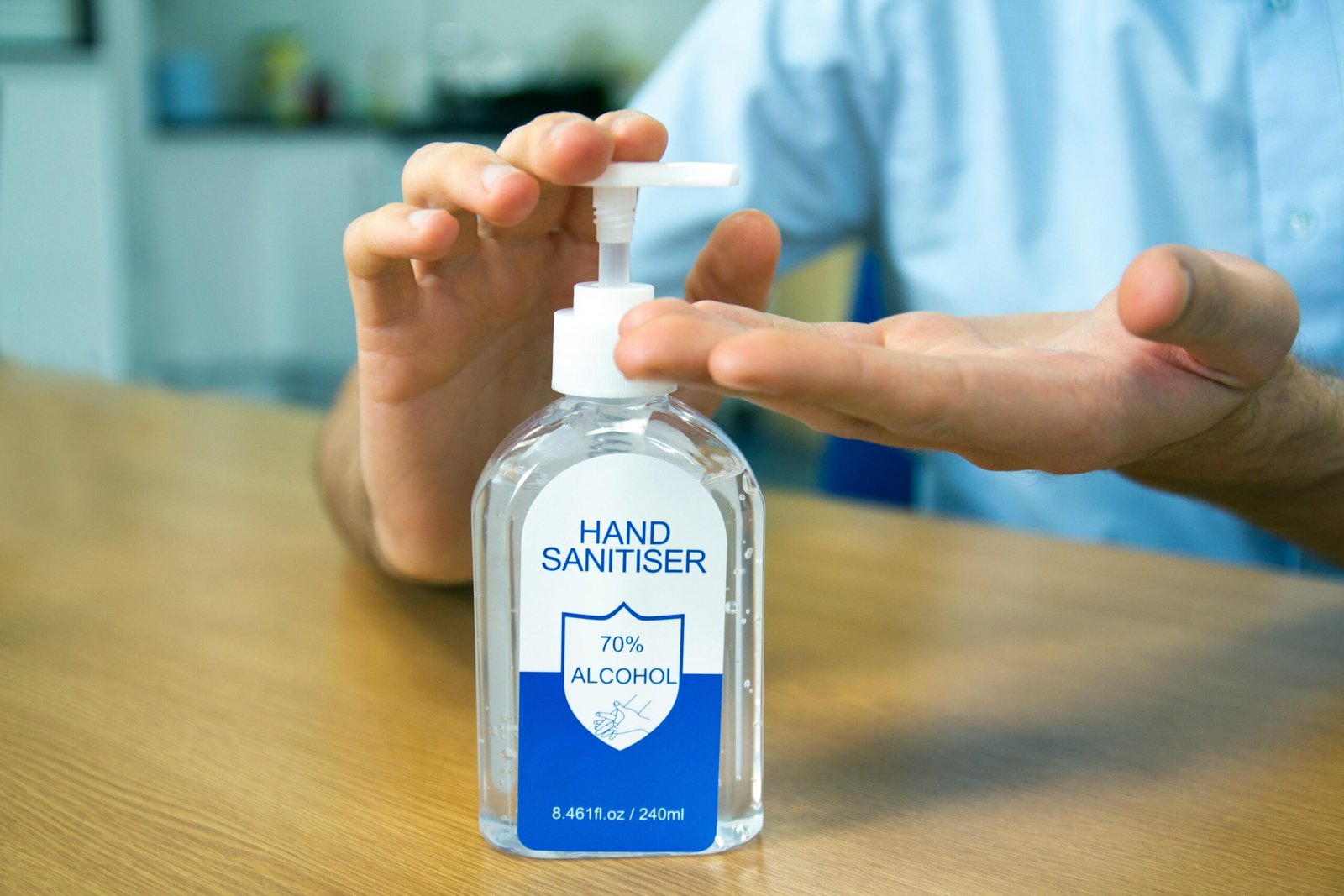
Hand sanitizing gel is one of the simplest products to formulate. In essence, it contains only three or four ingredients (depending on how you count). Let’s take a look at the typical composition:
Raw material | wt% |
Ethanol | 70 |
Water | up to 100 |
Glycerin | 2 |
Carbomer | depends |
Neutralizing agent | to pH = 6-7 |
The primary component is ethanol, which should be maintained at a fixed concentration of 70%. Glycerin acts as a moisturizer, while carbomer increases the viscosity so the gel isn’t too runny.
Carbomers are highly effective viscosity builders, and they come in a wide variety of types. Some require neutralization, while others are pre-neutralized and supplied in liquid form. Their performance characteristics vary, but most will work for this application. Only a small amount is typically needed, because certain carbomers can reach viscosities of up to 60,000 cP or even higher at a 1% loading when used as 100% active materials. The neutralizing agent used may also influence the final viscosity, but this effect is not critical. A simple sodium hydroxide solution will do the job; add it until the desired pH is reached. Most carbomers achieve their maximum viscosity in the pH range of 6 to 8.
It is important to avoid any electrolytes, such as inorganic salts, because they severely impair carbomer performance. Even 1% sodium chloride can practically eliminate the thickening effect of any carbomer.
The formula can be further enhanced by adding fragrance oils or aroma chemicals, but that falls outside the scope of this guide.