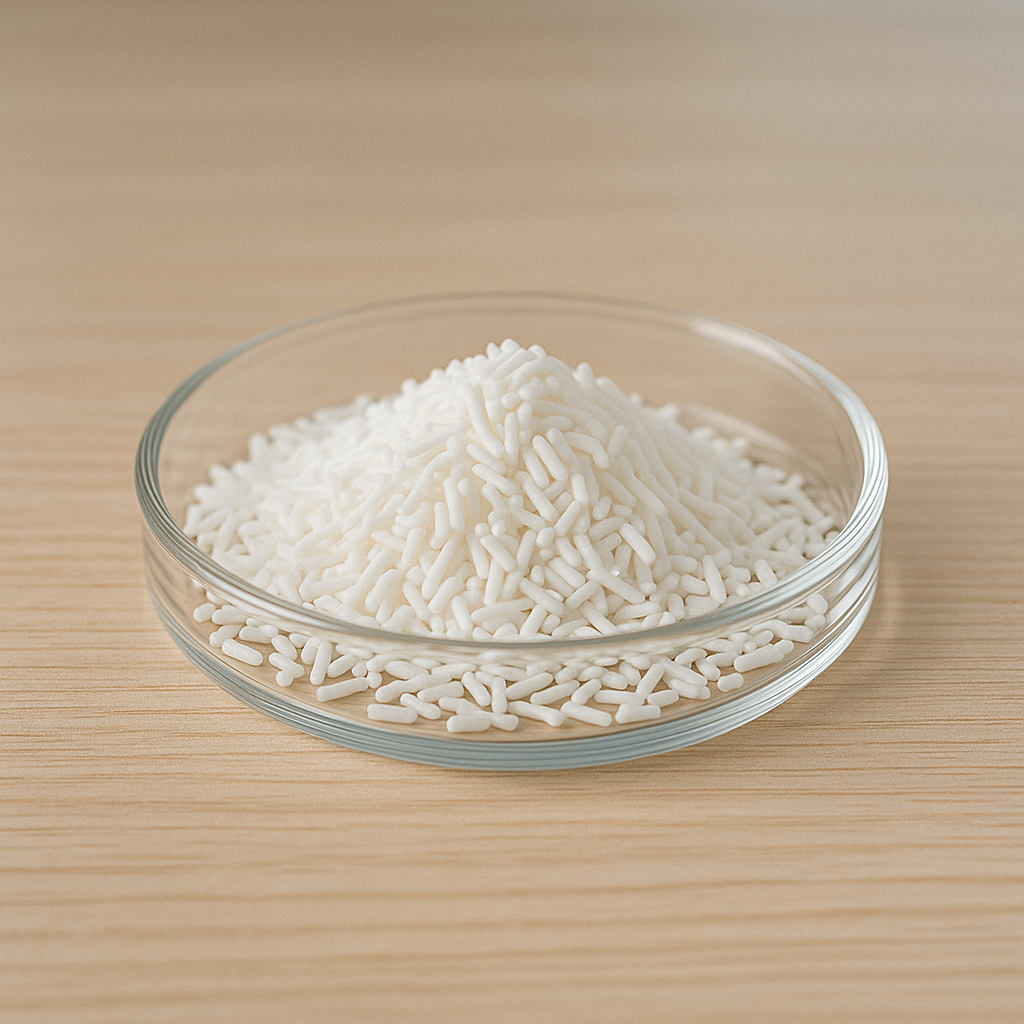

Potassium sorbate serves as a precursor to the widely used preservative, sorbic acid. For it to function effectively as a preservative, potassium sorbate must first be converted into sorbic acid, a process that occurs when the pH of the formulation is lowered. The preservative efficacy is highly pH-dependent, with minimal to no activity observed at pH levels above 6. Further details can be found here. The conversion factor from potassium sorbate to sorbic acid is approximately 0.7464 at pH 2, under conditions of complete protonation; for example, 0.5% potassium sorbate is equivalent to approximately 0.373% sorbic acid. Be aware that sorbic acid, generated by lowering the pH of potassium sorbate, may precipitate if used above its solubility threshold, which is approximately 0.15% in water at room temperature. However its ability to remain dissolved is influenced by other substances in the solution.
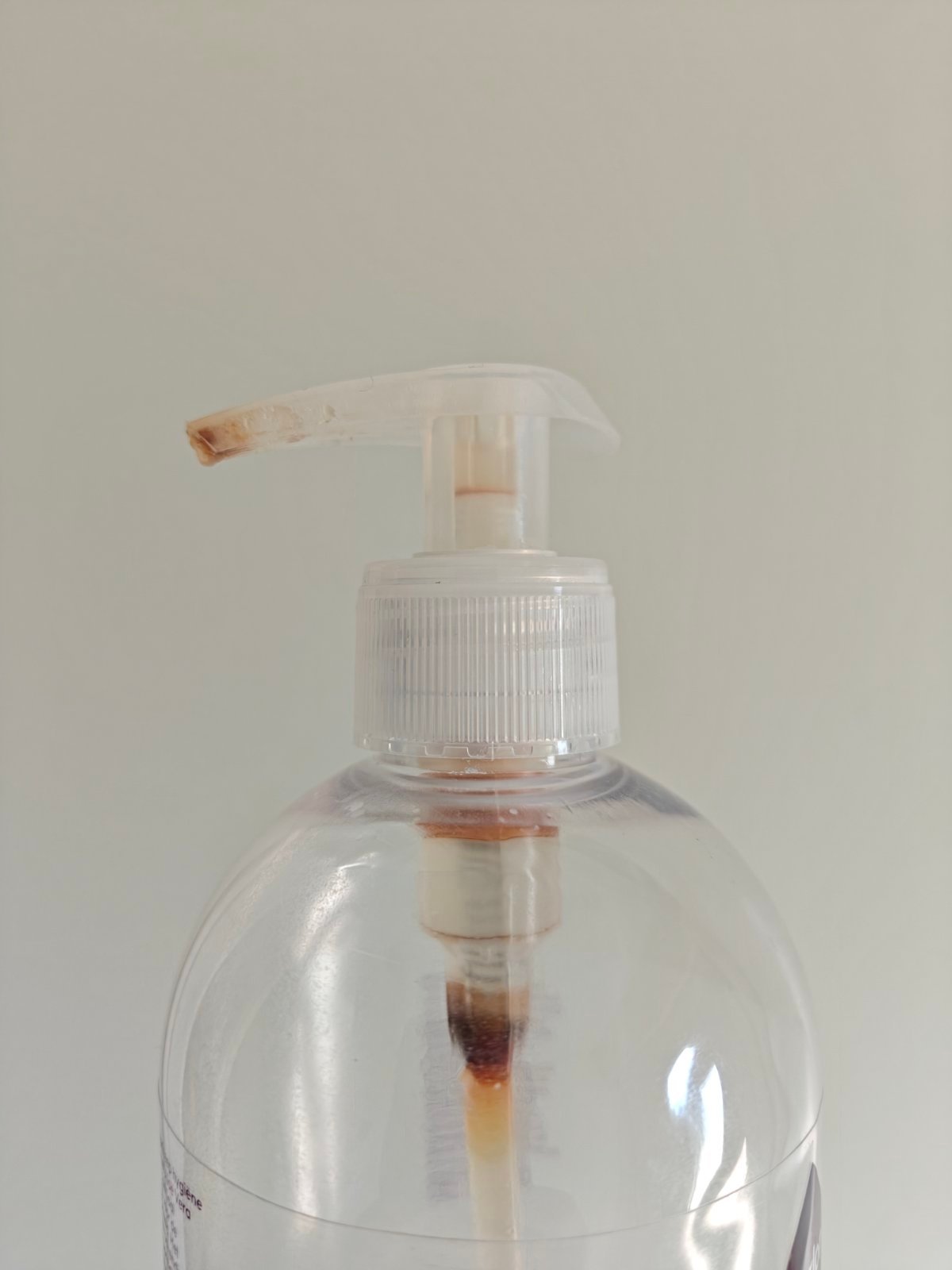
From a chemical standpoint, sorbic acid is a low molecular weight compound characterized by two double bonds in its structure and a tendency toward autooxidation. It exhibits limited stability in aqueous solutions, typically decomposing within a year at room temperature. However, in its dry crystalline form, sorbic acid remains highly stable. Additionally, in the presence of amino groups, it may undergo condensation reactions that result in the formation of brown pigments. The browning of sorbic acid is accelerated upon contact with other ingredients containing amino groups, such as amino acids. This image depicts a likely case of cross-contamination resulting from the interaction between proteins from human skin and a hand soap containing potassium sorbate as a preservative.