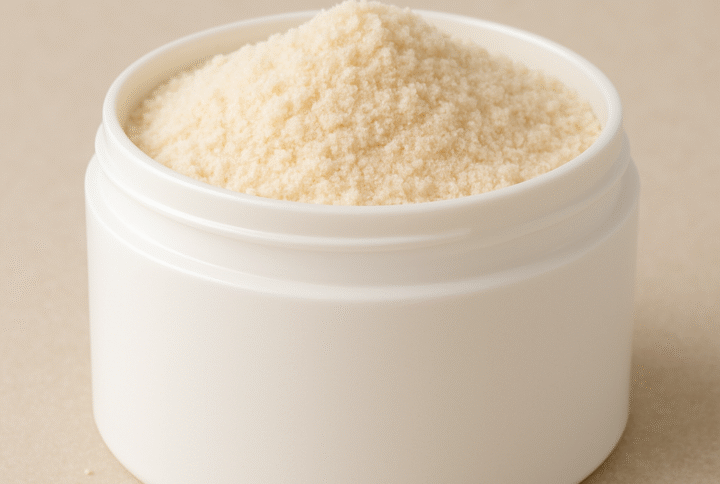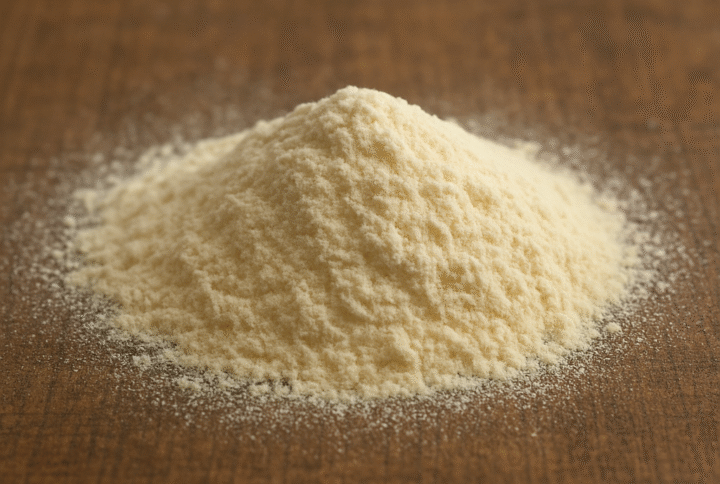
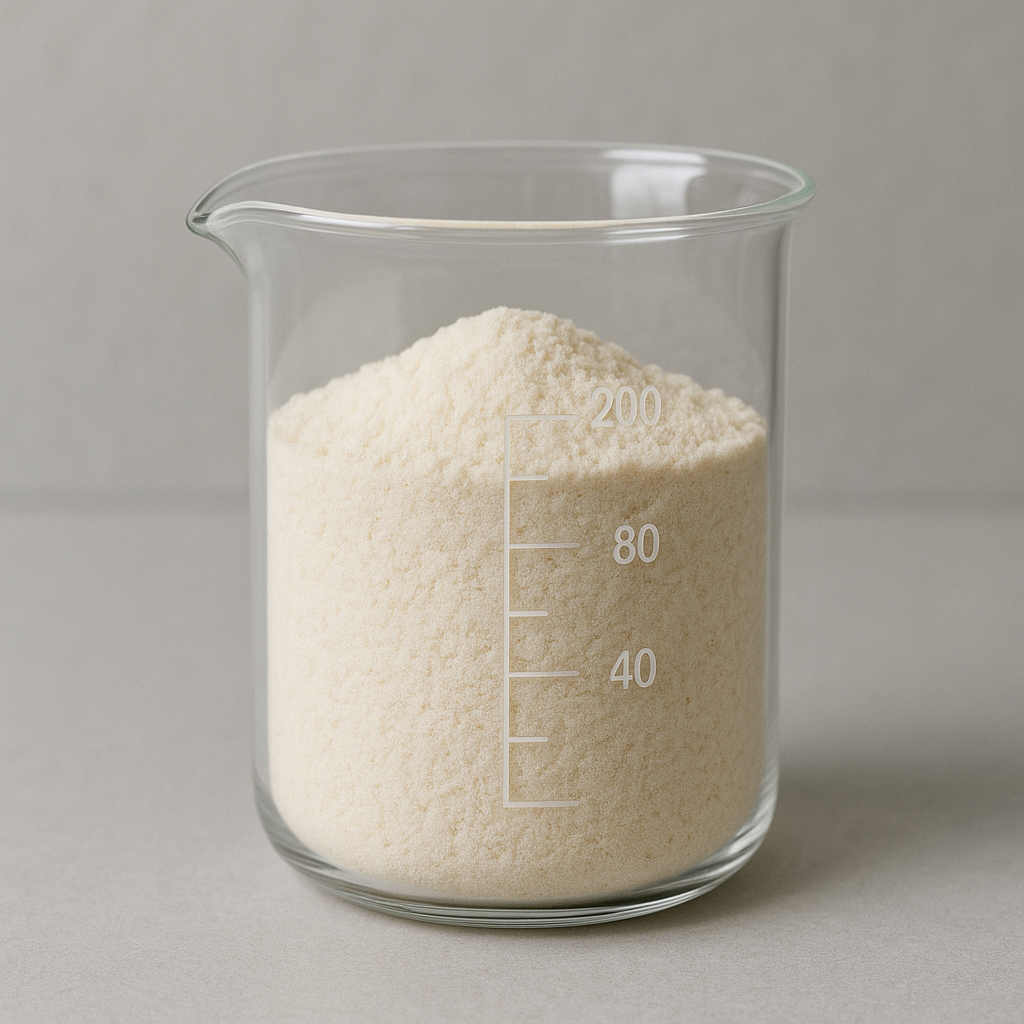

Guar gum is produced by milling the endosperm of the guar bean (Cyamopsis tetragonoloba), a crop widely cultivated in India and Pakistan. It is a neutrally charged polymer, making it compatible with formulations that include cationic ingredients such as positively charged preservatives and hair conditioning agents. Due to its nonionic nature, guar gum solutions remain stable across nearly the entire usable pH range (from 4 to 10.5), and the optimal hydration rate is achieved between pH 7.5 and 9. To prepare a solution with a very low or very high pH, the recommended approach is to first hydrate the gum at its natural pH and then adjust the pH as needed, down to as low as 1 or slightly above 10.5 to obtain stable solutions. Another result of guar gum’s nonionic nature is its unusual resistance to electrolytes. Its solutions are completely unaffected by hard water and can tolerate high levels of electrolytes that would typically impact most other gums.
The material is not hygroscopic but has a strong affinity for water. When mixed with hot or cold water, guar gum hydrates quickly and forms thick, gel-like solutions even at low concentrations, with viscosity close to that of carbomers. Guar gum reaches nearly its full viscosity potential in cold water, whereas other gums may require prolonged heating at elevated temperatures. However, heat does influence the hydration rate, significantly speeding it up as the temperature rises. For instance, while achieving full viscosity at room temperature might take around 5 hours, the same result can be obtained in just 10 minutes at an optimal temperature of 80 °C. Guar gum solutions can be exposed to high temperatures for extended periods with little to no impact on their final viscosity when measured at room temperature. It has been noted that sodium and calcium chloride solutions accelerate the hydration of guar gum without impacting its end-point viscosity. In contrast, sodium benzoate not only speeds up hydration but also significantly enhances the viscosity of the resulting solution.
Its synergistic interaction with xanthan gum forms stronger association, resulting in significantly higher viscosity and improved stability compared to either ingredient used individually. These blends are also less sticky, a characteristic attributed to the presence of guar gum.
In cosmetics and personal care products, guar gum is primarily valued for its ability to enhance texture and stability. In a variety of beauty formulations, it functions as a binder, viscosity modifier, and film-forming agent.