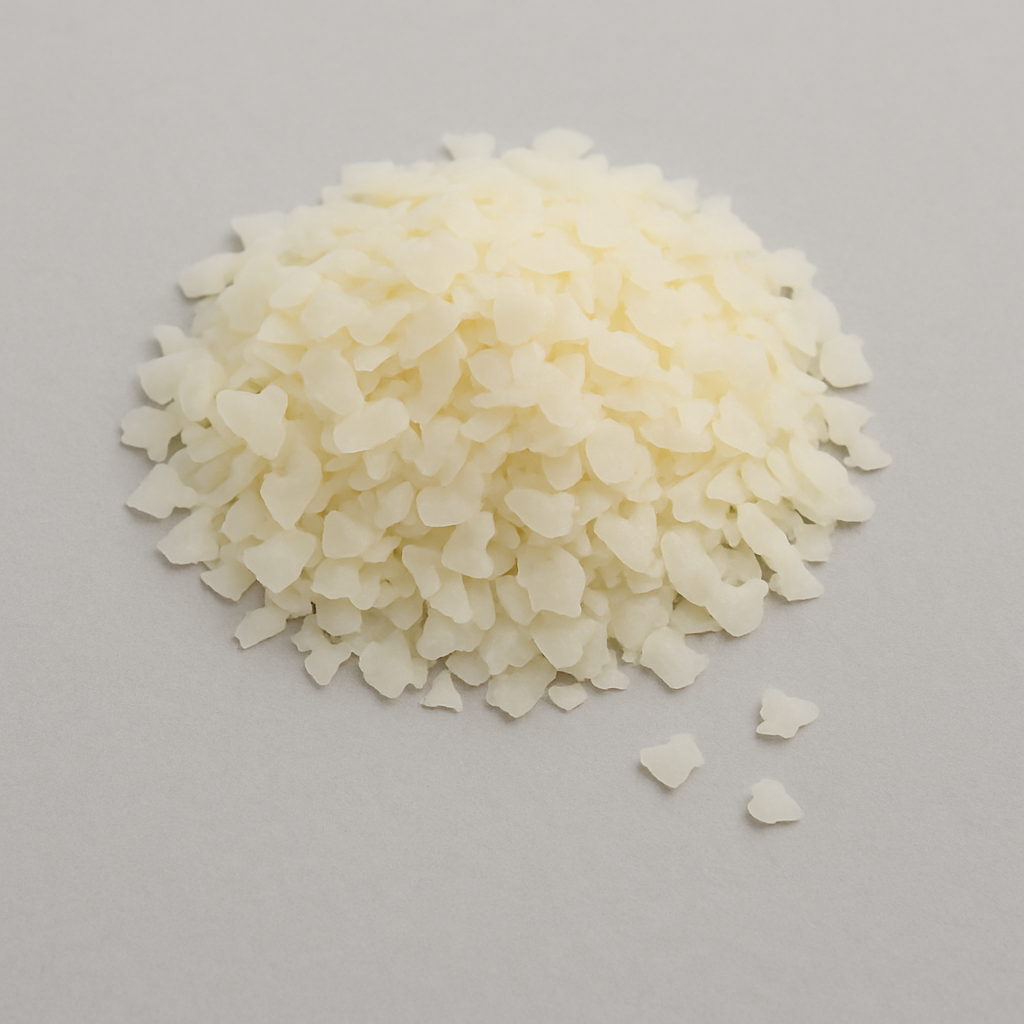

Behenamidopropyl dimethylamine (BAPDMA) is an innovative conditioning agent derived from modified behenic acid (C22). It offers enhanced environmental benefits compared to commonly used alternatives such as behentrimonium chloride (BTAC) and behentrimonium methosulfate (BTMS).
To activate its conditioning effects, BAPDMA must be neutralized with an acid within a hair rinse formulation. Lactic acid is strongly recommended for this process, as formulations neutralized with citric acid may separate at pH levels above 3*. High-viscosity hair conditioners are typically prepared by heating the water phase to 80 °C, then adding lactic acid and BAPDMA, and stirring the mixture vigorously until it becomes clear. Next, pre-melted fatty alcohols (such as cetyl or cetearyl alcohol), also heated to 80 °C, are incorporated into the formulation. For optimal conditioning performance, a 1:2 ratio of protonated BAPDMA to fatty alcohol is recommended (example: 3 g cetearyl alcohol, 1.23 g of BAPDMA and ca 0.27 g of 90% lactic acid).
The required amount of 90% lactic acid to fully neutralize BAPDMA can be calculated using the following formula:
Required grams of 90% lactic acid = 0.00178 × amino value (from certificate of anlysis) × grams of BAPDMA
Example: To neutralize 1.5 g of BAPDMA with an amino value of 135 mg KOH/g, you would need: 0.00178 × 135 × 1.5 = 0.36 g of 90% lactic acid.
Although BAPDMA has a strong affinity for negatively charged hair, it does not cause build-up, helping to prevent stickiness and loss of volume. In conditioning performance tests, it has demonstrated comparable results to BTAC and has outperformed other trimonium salts with shorter alkyl side chains. BAPDMA can also be combined with other cationic conditioning agents to adjust viscosity and enhance both wet and dry combability. Additionally, its 100% active concentration makes it a more cost-effective option than BTAC or BTMS.
* Minguet M, Subirats N, Castán P, Sakai T. Behenamidopropyl Dimethylamine: unique behaviour in solution and in hair care formulations. Int J Cosmet Sci. 2010 Aug;32(4):246-57.