
Natural, eco, bio materials for cosmetics
There is a growing trend toward natural, ecological, and biologically sourced products. At Trisphere, we fully recognize and respect this movement. However, there are several important considerations that merit discussion:
-
Some of the most potent toxins known to science, such as ricin, aflatoxin, amatoxin, and tetrodotoxin, are entirely natural and often exceed their synthetic analogues in potency. Nature is powerful: it fosters life, but it can also be ruthless in eliminating it.
-
Many natural substances, especially essential oils, may sound harmless but are, in fact, highly concentrated mixtures of complex aroma compounds. Improper handling can lead to skin irritation, allergic reactions, or worse.
-
Not all ingredients used in cosmetics and personal care products can be efficiently or sustainably derived from biological sources.
-
Finally, naturally sourced alternatives are often significantly more expensive, which can impact product accessibility and affordability.
- Natural extracts
Let’s explore each of these points in more detail:
- Harmful ingredients
Many people are afraid of approved ingredients in various cosmetic products but forget that the most powerful poisons are 100% natural. Every substance can be harmful under certain conditions. The distinction between a drug and a poison depends solely on its concentration.
- Essential Oils/Aroma chemicals
This is a more complex matter. Many cosmetic products include at least one essential oil. Sometimes they appear in very small amounts as part of a fragrance, while in other cases, such as in creams, lotions, balms, or soaps, they are used in much higher concentrations. Essential oils are not single substances; they are complex mixtures containing dozens of individual chemical compounds. Some of these components can be harmful if used improperly or in high concentrations.
Ever wondered why ingredients like linalool, citronellol, geraniol, coumarin, eugenol, hexyl cinnamaldehyde, or hydroxycitronellal are listed on the packaging of many personal care products? These are known allergens commonly found in essential oils. Regulations require their declaration on product labels when their concentrations exceed defined limits. A full list of regulated fragrance allergens is available here.
What’s more, essential oils with the same name can vary significantly in their chemical composition depending on where and how they are sourced. Take cedarwood essential oil, for example. It can come from Atlas cedarwood (Morocco), Himalayan cedarwood, or Virginian/Texas cedarwood, and each variety may differ chemically. Even within the same region, seasonal and environmental factors like sunlight, rainfall, and temperature can influence the oil’s composition. Additionally, some essential oils can be hazardous. For example, eucalyptus or lemongrass oil, both natural products, carry four GHS hazard pictograms, far more than any synthetic cosmetic additive. This reminds us that “natural” does not automatically mean “safe.”
- Functional Ingredients: Naturally Derived but Not Used As-Is
Many high-performing cosmetic ingredients are not used in their natural form but are instead chemically modified to enhance their functionality, safety, or stability. A good example includes ethoxylated emulsifiers such as PEG-40 hydrogenated castor oil and polysorbates, which are commonly used to solubilize fragrances. Other examples include guar hydroxypropyltrimonium chloride, a conditioning agent derived from guar gum, and a wide range of surfactants, which are essential components in cleansers and shampoos and typically cannot be made directly from unmodified natural materials. Some ingredients, such as polyquaterniums or carbomers (synthetic acrylic polymers used as thickeners and stabilizers), are not realistically producible from natural sources at all. Similarly, modified silicones like dimethicone or amodimethicone are not natural, yet they are widely used due to their unique performance benefits in hair and skin care formulations.
- Cost Considerations
Price is often a key factor when choosing between different cosmetic products. Naturally sourced materials are frequently more expensive than their synthetic counterparts. In many cases, the cost of using natural alternatives can be several times higher, which affects product pricing, accessibility, and scalability. It’s important to avoid comparing apples to oranges when evaluating natural versus synthetic raw materials.
For example, natural tocopherol (vitamin E) and its synthetic counterpart are not chemically identical. Natural tocopherol consists of a mixture of different isomers, whereas the synthetic version can be produced as a single, pure isomer.
Natural raw materials can offer great benefits, but they shouldn’t come at an unreasonable cost. For instance, some surfactants are not 100% active, yet they cost 40–50 €/kg, and some natural emulsifiers can cost around 100 €/kg. From our perspective, recommending that people create personal care products at home using such high-priced ingredients isn’t very practical. However, the choice is yours. You can absolutely formulate a top-quality product using alternative raw materials without breaking the bank.
Take, for example, a “natural” preservative blend. It sounds appealing, but when over 70% of it is simply glycerin and water and the mix still costs more than €50 per kilo, you start to question things. No thanks, I’ll stick to synthetics.
Would you be willing to pay, say, three times more for natural citronellol, an aroma compound, if it smells exactly the same as its synthetic equivalent? Especially knowing that both are classified as allergens, have the same GHS labeling and neither offers any added functional benefit beyond scent?
- Natural extracts
Natural algae, plant, and fruit extracts are widely used in personal care products for their healing and beneficial properties. However, because of their high water content, these extracts are highly susceptible to microbiological contamination and therefore require preservation. This is often achieved through the use of synthetic preservatives such as sodium benzoate or blends containing potassium sorbate. Some extracts may contain only 1–3% active ingredients and around 0.5% synthetic preservative, with the remainder consisting of glycerin and water. This raises the question of how “natural” such an extract truly is.
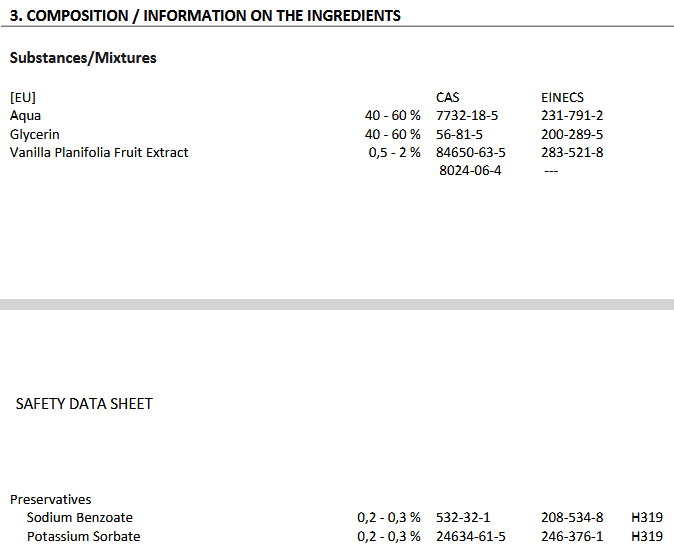
Additionally, these extracts must be highly effective; otherwise, you are essentially paying a premium for little more than a water–glycerin mixture.