
Formulating tips
Personal care products often contain ingredients that are difficult to source for small-scale formulators, but should that stop us from creating? We don’t think so. Viable alternatives are available and can perform just as well as the original ingredients. In fact, the same material can come in different grades, each with distinct properties. Take guar hydroxypropyltrimonium chloride for example, a widely used conditioning agent in shampoos. Its performance can vary significantly depending on its molecular weight and degree of chemical modification, ranging from moderate to excellent conditioning effects. Various grades exist for xanthan gum, hydroxyethylcellulose, and numerous other ingredients that carry the same designation, including acrylic thickeners and silicones. This is particularly relevant in the case of unmodified silicones, as the term dimethicone refers to any linear polydimethylsiloxane (PDMS), with viscosities ranging from approximately 1 to 1,000,000 cSt. Any modification to the PDMS chain introduces further complexity.
Although a personal care product may list 20 or more individual components on its label, the final formulation often consists of multiple blends rather than single raw ingredients.
Let me examine the following shampoo formulation, which is simple in composition but high in cost.
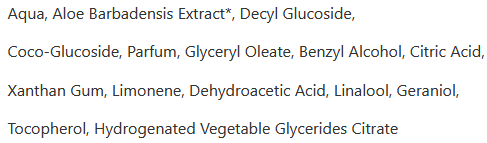
Coco-glucoside, glyceryl oleate, citric acid, tocopherol, and hydrogenated vegetable glycerides citrate are all part of a single specialty blend known as ABC. Limonene, linalool, and geraniol are fragrance components, while dehydroacetic acid and benzyl alcohol are commonly supplied together as a preservative blend called X. In this case, the shampoo is actually composed of just a few key ingredients: water, aloe vera extract, decyl glucoside surfactant, blend ABC, xanthan gum, preservative blend X, and fragrance. It doesn’t appear to be too complicated, does it?
Was that too simple? Then let’s look at a more sophisticated and pricier product (50 mL costing over €30):
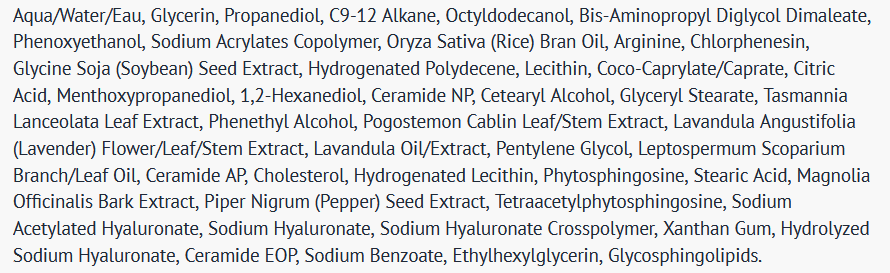
That’s certainly an impressive formulation, filled with complex, hard-to-pronounce ingredient names. It practically sounds like rocket science. Now comes the interesting part.
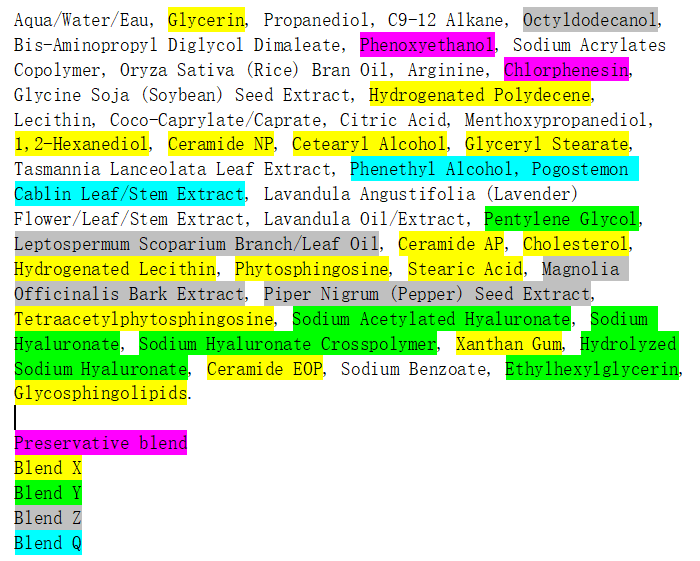
Whether it still qualifies as “rocket science” is debatable. However, the main disadvantage of such formulations lies in the fact that these blends are typically available from a single supplier, allowing them to dictate pricing. Moreover, these materials are generally inaccessible to DIY formulators.
Another formulation for a branded facial cleanser designed for acne-prone skin:
AQUA/WATER, COCAMIDOPROPYL HYDROXYSULTAINE, GLYCERIN, SODIUM LAUROYL SARCOSINATE, NIACINAMIDE, SALICYLIC ACID, SODIUM METHYL COCOYL TAURATE, PEG-150 PENTAERYTHRITYL TETRASTEARATE, GLUCONOLACTONE, SODIUM COCOYL ISETHIONATE, CERAMIDE NP, CERAMIDE AP, CERAMIDE EOP, CARBOMER, CALCIUM GLUCONATE, TRIETHYL CITRATE, SODIUM HYDROXIDE, SODIUM BENZOATE, SODIUM CHLORIDE, SODIUM LAUROYL LACTYLATE, CHOLESTEROL, COCONUT ACID, TETRASODIUM EDTA, CAPRYLYL GLYCOL, HYDROLYZED HYALURONIC ACID, TRISODIUM ETHYLENEDIAMINE DISUCCINATE, HECTORITE, PHYTOSPHINGOSINE, XANTHAN GUM, ACRYLATES COPOLYMER, BENZOIC ACID.
Let’s take a closer look:
AQUA/WATER, COCAMIDOPROPYL HYDROXYSULTAINE, SODIUM CHLORIDE — This is essentially an amphoteric surfactant system, with sodium chloride functioning as a component of that system rather than being added independently.
SODIUM COCOYL ISETHIONATE, COCONUT ACID — This represents an SCI surfactant; the coconut acid is part of the SCI system, not a separately added ingredient
CERAMIDE NP, CERAMIDE AP, CERAMIDE EOP, CARBOMER, SODIUM LAUROYL LACTYLATE, CHOLESTEROL, PHYTOSPHINGOSINE, XANTHAN GUM — This is a pre-made commercial ceramide complex.
GLUCONOLACTONE, CALCIUM GLUCONATE, SODIUM BENZOATE — A preservative system.
GLYCERIN, CAPRYLYL GLYCOL, BENZOIC ACID — Likely an additional preservative blend.
The presence of two preservative blends is probably because one comes premixed within the ceramide complex. In summary, the formulation can be viewed as a set of functional blocks (based on my best interpretation):
-
Surfactant system: Cocamidopropyl hydroxysultaine, sodium lauroyl sarcosinate, sodium methyl cocoyl taurate, sodium cocoyl isethionate (all sulfate-free surfactants)
-
Anti-acne actives: Niacinamide, salicylic acid
-
Thickeners / stabilizers: PEG-150 pentaerythrityl tetrastearate, hectorite, acrylates copolymer
-
Ceramide complex
-
Chelators: Tetrasodium EDTA, trisodium ethylenediamine disuccinate
-
Humectant: Hydrolyzed hyaluronic acid
-
Preservatives
The preservation of a formulated product is often the trickiest part, since it cannot be guaranteed solely by adding a specific preservative, because its effectiveness depends on the overall formulation. The optimal dosage can only be determined through microbiological testing. However, the performance of many preservatives is well-documented, allowing for an educated estimation that may be sufficient in practice.
When formulating a personal care product, treat commercial products as references rather than exact models. Avoid focusing on aroma chemicals, dyes, or natural extracts in the early stages. Disregard raw materials that are difficult to source and opt for alternatives. Formulations are never fixed, as there are always multiple paths to achieve the intended result, though the process can occasionally be frustrating.
Just like building a house begins with a solid foundation before adding walls and finishing touches, a formulation should start with a strong base. You can refine the properties later. If your goal is to create a shampoo, prioritize foaming ability and viscosity. The recipes provided on this website are intended as general guides. What works well for me might not suit you, because our skin and hair types are different. It is similar to food. A dish can be nutritious and well-prepared but still not match your personal taste. I strongly dislike champignons and won’t eat them regardless of their alleged health benefits.