
Moisturizing cream
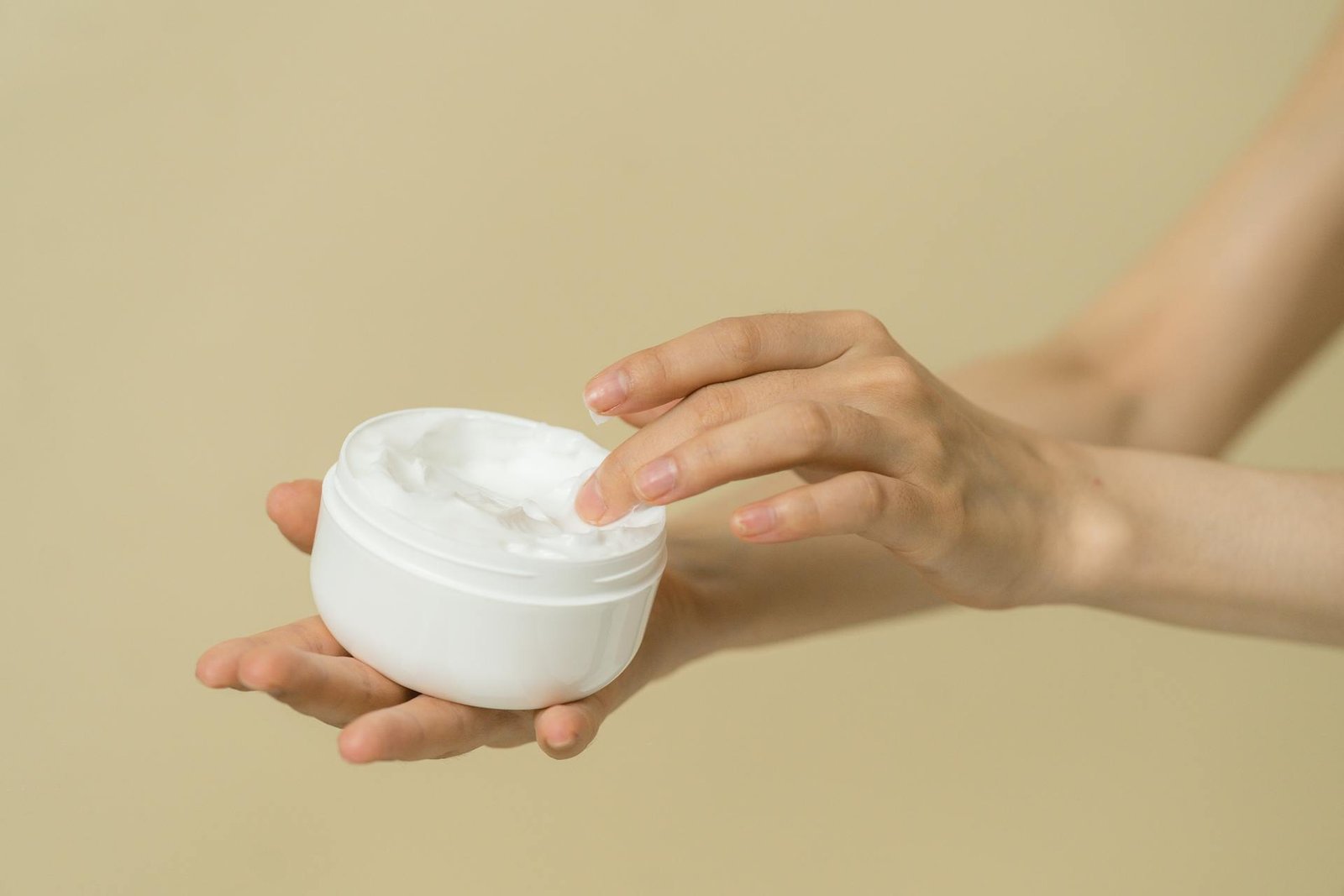
This section outlines the general principles involved in making creams and provides a guide formulation.
Formulation Instructions
- In separate beakers, weigh the ingredients for the water (W) and oil (O) phases, then heat both to approximately 75°C.
- Slowly add the oil phase (O) to the water phase (W) while stirring at high speed. Continue high-speed mixing for 5 minutes to ensure proper emulsification.
- Reduce the stirring speed and continue mixing until the mixture cools to near ambient temperature.
- Add preservative and mix until the formulation becomes homogeneous. Check and adjust the pH of the final product as needed.
Reasoning Behind the Formulation
Selecting the right emollients for a cream is comparable to creating a perfume, where aroma chemicals and fragrance oils are carefully chosen to build top, heart, and base notes. In the same way, emollients are classified into three categories based on their spreading rate: fast, medium, and slow. To deliver a complete and balanced sensorial experience during application and after-feel, it is recommended to include emollients from all three categories.
It is important to note that not all emollients within the same spreading category perform in the same manner. They differ in polarity, chemical composition, and viscosity, and these factors significantly influence the texture, absorption, and overall feel of the final product. When using low-polarity materials such as hydrocarbons or ether-based compounds, a stronger emulsifier may be necessary to achieve a stable emulsion.
In the formulation described above, C12-15 alkyl benzoate functions as a slow-spreading emollient, octyldodecanol as a medium-spreading emollient, and dicaprylyl ether as a fast-spreading emollient. Glyceryl stearate and emulsifying wax CC serve as the primary emulsifiers, while cetearyl alcohol contributes to the product’s body and consistency. A higher concentration of cetearyl alcohol will result in a thicker, more viscous formulation.
To further enhance the health benefits, natural oils, antioxidants, vitamins, and other active ingredients can be added.