
Xylitol is a natural sweetener commonly used as a substitute for sucrose in foods and confectionery. It is frequently found in chewing gums, mouth rinses, and toothpastes, where it helps reduce dental plaque and cavities. Unlike sucrose, xylitol is not fermented into acid by oral bacteria, thus preventing the formation of tooth-decaying compounds.
Xylitol has a sweetness level comparable to that of sucrose and is 2-2.5 times sweeter than mannitol. Additionally it has a markedly lower heat of solution compared to other alternative sweeteners:
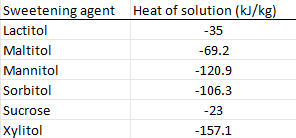
As a result, it creates a pronounced cooling sensation when its crystalline form dissolves.
Xylitol has a very low glycemic index and is metabolized without the involvement of insulin, making it an appropriate sweetener for diabetic or carbohydrate-restricted diets. Single doses of 20–30 grams and daily intakes of 0.5–1.0 grams per kilogram of body weight are generally well tolerated by most people. However, it is extremely toxic to dogs.
In skin care products, xylitol is used primarily for its humectant properties.
Xylitol is highly water-soluble and exhibits hygroscopic properties, particularly under high humidity conditions. It is readily biodegradable and is not considered hazardous to the environment.