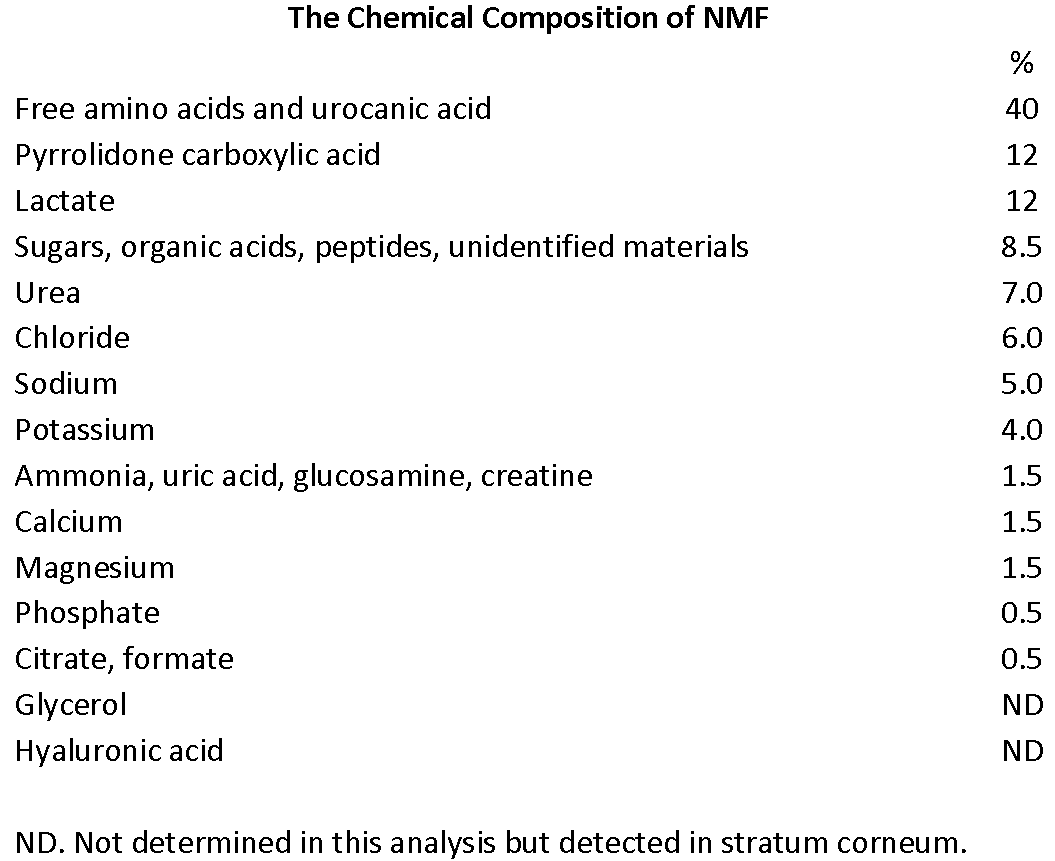

Sodium PCA (Sodium Pyrrolidone Carboxylic Acid) is a plant-derived, amino acid-based humectant that plays a key role in maintaining skin hydration. PCA (pyrrolidone carboxylic acid) comes from glutamic acid, a natural amino acid found in the body. While glutamic acid naturally exists in one specific form (called the L-form), the PCA used in skincare and hair care products is usually a mix of two mirror-image forms (known as a racemic mixture). On its own, PCA is a white, crystal-like substance that doesn’t attract or hold moisture. However, when it’s turned into a salt—Sodium PCA—it becomes a powerful hydrating ingredient, known for its ability to draw in and retain moisture effectively.
As a major component of the skin’s Natural Moisturizing Factors (NMF)* it helps keep the outermost layers of the skin smooth, hydrated, and healthy-looking. Renowned for its excellent moisture-attracting and retention capabilities, sodium PCA is more effective than glycerin. Research shows that healthy skin contains significantly higher levels of amino acids and PCA compared to dry skin.
In hair care products, Sodium PCA enhances both wet and dry combability, reduces flyaways, and provides moisturizing and antistatic benefits in conditioners. When used together with guar hydroxypropyltrimonium chloride, sodium PCA can partially replace it, helping to reduce the sticky or tacky feel that cationic guar can sometimes leave behind.
Sodium PCA is generally well-tolerated and neither cause common side effects like skin irritation nor trigger acne. Additionally, it has a low absorption rate, so it stays on the surface of the skin or scalp without penetrating deeply, reducing the risk of any harmful effects.
Applications:
- Hair
- Shampoos
- Conditioners
- Color products
- Styling products
- Skin
- Facial cleansers
- Serums
- Creams
- Lotions
*Lodén, Marie & Maibach, Howard. (2005). Dry skin and moisturizers: Chemistry and function, 2nd edition.